
Imagine waking up to money flowing into your account while you sip coffee or explore a new city. That’s the power of passive income—earnings that require little ongoing effort after the initial setup. In 2025, with advancements in technology, accessible investment platforms, and a growing demand for digital solutions, creating passive income streams is more achievable than ever. This 2,000+ word guide dives into passive income ideas that actually work, offering actionable steps, expert tips, and strategies to help you build wealth sustainably. Whether you’re a beginner or an experienced investor, these ideas will set you on the path to financial freedom.
Understanding Passive Income
Passive income is revenue generated with minimal daily involvement, often through investments, automated systems, or assets. Unlike active income from a traditional job, passive income allows you to earn money while focusing on other priorities, like family, hobbies, or travel. While some upfront time, money, or both are typically required, the goal is to create income streams that run on autopilot.
Why Passive Income Is Essential in 2025
Economic shifts, including inflation and job market uncertainty, make passive income a critical tool for financial security. A 2024 Gallup poll found that 39% of Americans worry about money daily, driving interest in passive income to reduce financial stress. With remote work tools and investment platforms democratizing wealth-building, 2025 is the perfect time to start.
7 Passive Income Ideas That Deliver Results
Below are seven proven passive income strategies, each with detailed steps, benefits, drawbacks, and tips for success. These ideas cater to various budgets, skills, and time commitments, ensuring there’s something for everyone.
1. Rental Real Estate Investments
What It Is: Owning rental properties, like apartments or vacation homes, generates passive income through monthly rent payments.
Why It Works in 2025: Despite high interest rates, rental demand remains strong in growing cities, with Zillow reporting a 4% increase in rental prices in 2024. Property management services make this hands-off for investors.
How to Start:
- Research Markets: Use Zillow or Redfin to identify high-demand areas (e.g., Phoenix, Raleigh) with strong rental yields (5–8%).
- Finance: Save for a 20% down payment or explore low-down-payment loans like FHA for first-time buyers.
- Purchase: Work with a real estate agent to find cash-flow-positive properties (rental income exceeds expenses).
- Hire Management: Use services like Roofstock or local property managers (8–12% of rent) to handle tenants and maintenance.
- Monitor: Review quarterly reports from your manager to ensure profitability.
Pros:
- Steady monthly income.
- Property appreciation potential.
- Tax benefits (e.g., depreciation, mortgage interest deductions).
Cons:
- High upfront costs ($50,000+ for down payments).
- Tenant or maintenance issues.
- Market downturn risks.
Tip: Start with a single-family home in a stable market to minimize risk. A $200,000 property with $1,500 monthly rent can yield $6,000 annually after expenses.
2. Peer-to-Peer Lending
What It Is: Peer-to-peer (P2P) lending platforms connect investors with borrowers, allowing you to earn interest on loans you fund.
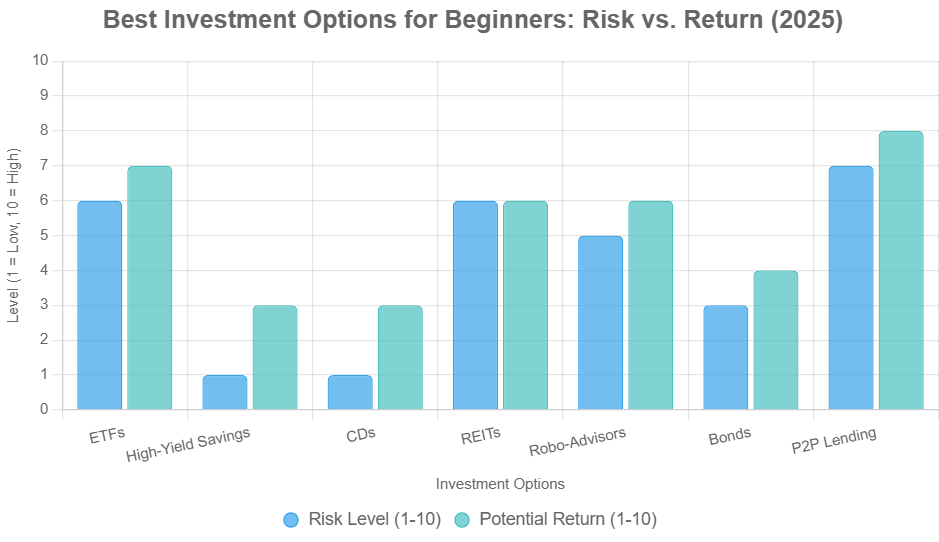
Why It Works in 2025: With traditional banks tightening credit, P2P platforms like Prosper and LendingClub offer 5–10% annual returns, filling the gap for borrowers and investors.
How to Start:
- Choose a Platform: Sign up with Prosper, LendingClub, or Upstart. Compare fees and default rates.
- Fund Loans: Start with $1,000, diversifying across 40+ loans ($25 each) to reduce risk.
- Select Borrowers: Focus on high-credit-score borrowers (700+) for lower default rates.
- Reinvest: Automatically reinvest principal and interest to compound returns.
- Track: Use platform dashboards to monitor loan performance.
Pros:
- High returns compared to savings accounts.
- Low entry point ($25–$1,000).
- Automated investing options.
Cons:
- Risk of borrower defaults.
- Limited liquidity (loans mature in 1–5 years).
- Platform fees (1–2%).
Tip: Diversify across loan grades and reinvest monthly to maximize compounding.
3. Sell Online Courses
What It Is: Creating and selling online courses on platforms like Udemy or Kajabi generates passive income through automated sales.
Why It Works in 2025: The global e-learning market is expected to hit $470 billion by 2026, per Research and Markets, driven by demand for skills in AI, coding, and wellness.
How to Start:
- Pick a Topic: Use BuzzSumo or Google Trends to find trending niches (e.g., “Python for beginners,” “mindfulness meditation”).
- Create Content: Record 2–5 hours of video using Zoom or Camtasia. Add quizzes and worksheets for value.
- Host: Upload to Udemy, Teachable, or your website. Price courses at $50–$200.
- Market: Promote via YouTube tutorials, TikTok, or SEO-optimized blog posts targeting “best [course topic]” keywords.
- Automate: Use email funnels (e.g., Mailchimp) to upsell related courses.
Pros:
- High margins (80–95% after platform fees).
- Scalable with no inventory.
- Evergreen content earns long-term.
Cons:
- Significant upfront time (20–50 hours).
- Marketing needed for visibility.
- Competitive niches require differentiation.
Tip: Offer a free mini-course to build an email list and drive full-course sales.
4. Build a Niche Blog with Affiliate Marketing
What It Is: A niche blog earns passive income through affiliate links, promoting products or services for commissions.
Why It Works in 2025: Affiliate marketing spending is projected to reach $15.7 billion by 2026, per Influencer Marketing Hub. Blogs targeting low-competition, high-CPC keywords (e.g., “best travel insurance”) thrive.
How to Start:
- Choose a Niche: Focus on profitable niches like personal finance, tech gadgets, or health supplements.
- Set Up: Buy a domain ($10/year) and hosting ($5/month) via Bluehost. Install WordPress and a free theme.
- Create Content: Write 15–20 articles (1,500–2,500 words) targeting low-competition keywords (use SurferSEO or Ubersuggest).
- Join Affiliates: Sign up for Amazon Associates (1–10% commissions), Impact, or CJ Affiliate (5–30%).
- Drive Traffic: Optimize for SEO, share on Reddit, and use Google Ads for initial traction.
Pros:
- Low startup costs ($100–$200/year).
- Multiple revenue streams (ads, affiliates, sponsored posts).
- Scalable with evergreen content.
Cons:
- Takes 6–12 months to rank on Google.
- Ongoing SEO maintenance.
- Traffic-dependent income.
Tip: Aim for 30–50 posts before monetizing to build authority and traffic.
5. Print-on-Demand Merchandise
What It Is: Design custom products (e.g., T-shirts, mugs) sold through platforms like Printful or Redbubble, with production and shipping handled automatically.
Why It Works in 2025: E-commerce sales are growing, with Shopify reporting a 25% increase in print-on-demand revenue in 2024. Niche designs resonate with targeted audiences.
How to Start:
- Choose a Niche: Target specific groups (e.g., dog owners, gamers) using Etsy Trends or X searches.
- Design: Create graphics with Canva or hire a designer on Upwork ($10–$50 per design).
- Set Up: Integrate Printful with Shopify or Etsy. Price products for 20–40% margins (e.g., $20 T-shirt sells for $30).
- Market: Use Instagram ads, Pinterest pins, or SEO-optimized product descriptions.
- Scale: Add new designs monthly to refresh your catalog.
Pros:
- No inventory or shipping hassle.
- Low startup costs ($0–$100).
- Creative outlet.
Cons:
- Low margins (10–30%).
- Marketing required for sales.
- Design theft risks.
Tip: Test 10–20 designs to find winners, then scale successful products.
6. License Your Photos or Music
What It Is: Sell royalty-free licenses for your photos, videos, or music through stock platforms like Shutterstock or AudioJungle.
Why It Works in 2025: Demand for authentic visuals and audio is rising for ads, social media, and YouTube, with Adobe Stock reporting a 15% growth in contributor earnings in How to Start:
- Create Content: Use a DSLR or software like FL Studio to produce high-quality photos, videos, or music tracks.
- Choose Platforms: Upload to Shutterstock, Pond5, or Epidemic Sound. Each platform pays $0.25–$100 per download.
- Optimize Listings: Use descriptive titles and tags (e.g., “sunset beach aerial” for photos) for discoverability.
- Build a Portfolio: Aim for 100+ assets to increase earnings potential.
- Promote: Share your portfolio on X or photography forums to attract buyers.
Pros:
- Truly passive after uploading.
- Low startup costs (use existing equipment).
- Scalable with more uploads.
Cons:
- High-quality content required.
- Slow initial traction (3–6 months).
- Platform commissions (20–40%).
Tip: Focus on trending themes like remote work, sustainability, or lo-fi music to boost sales.
Discover creative passive income ideas.
7. Invest in Index Funds
What It Is: Index funds track market indices (e.g., S&P 500), offering passive income and growth through dividends and appreciation.
Why It Works in 2025: Historically, the S&P 500 averages 7–10% annual returns. Low-cost ETFs like Vanguard’s VTI or SPY are ideal for passive investors.
How to Start:
- Choose a Brokerage: Open an account with Vanguard, Fidelity, or Robinhood.
- Invest: Start with $1, $500–$2,000, allocating to low-fee funds (expense ratio <0.1%).
- Automate: Set up monthly contributions ($100–$500) to dollar-cost average.
- Reinvest: Enable dividend reinvestment to compound returns.
- Hold Long-Term: Review annually to rebalance.
Pros:
- Low risk through diversification.
- Minimal maintenance.
- Tax-efficient in Roth IRAs.
Cons:
- Market volatility affects returns.
- Lower yields (2–3% dividends) than other options.
- Requires patience.
Tip: Combine with a dividend-focused fund like SCHD for higher cash flow.
Explore long-term investment options.
Tips to Maximize Your Passive Income
- Diversify: Spread investments across multiple streams (e.g., real estate + affiliate marketing) to mitigate risk.
- Automate Processes: Use Zapier for marketing automation or or robo-advisors like M1 Finance for investing.
- Reinvest Earnings: Compound returns by reinvesting profits into new assets or content.
- Monitor Trends: Stay informed via X or finance blogs for emerging opportunities (e.g., AI-driven investments).
- Budget for Taxes: Save 20–30% of earnings for taxes, and consult a tax professional.
Common Pitfalls to Avoid
- Chasing Get-Rich-Quick Schemes: Passive income requires effort or capital upfront. Avoid hyped trends like crypto pumps.
- Ignoring Maintenance: Even passive streams like blogs or rentals need occasional updates.
- Overloading: Start with one or two streams to avoid overwhelm, scaling gradually.
- Neglecting Research: Vet platforms, niches, or investments thoroughly to avoid losses.
Conclusion
In 2025, passive income is a realistic path to financial independence, offering flexibility and security in an evolving economy. From rental properties to online courses, the seven ideas above provide actionable ways to build wealth with varying levels of time and capital. Start small, stay consistent, and diversify to create a robust income portfolio.
Take Action Now: Choose one idea from this guide, set a 1–2 hour plan to begin, and track progress monthly. Share your passive income goals below or explore more financial strategies to accelerate your journey!
Further Reading



2 thoughts on “7 Proven Passive Income Ideas That Actually Work in 2025”